Homemade Fresh Pasta (Two-Ingredient)
Flour and egg. That is the whole ingredient list, which means there is nowhere to hide — the result comes down to hydration, kneading and rest, and all three are things you can feel rather than measure.
★ At a glance
- Serves: 4 as a main, 6 as a first course
- Makes: about 500 g fresh pasta
- Prep: 25 minutes, plus 30–60 minutes resting
- Rolling and cutting: 30 minutes
- Difficulty: moderate — the first batch teaches you the rest
What makes this different
The classic Italian ratio is 100 g flour to one egg, and it is worth internalising because it scales instantly. Adding a couple of extra yolks past that ratio is the one refinement worth making: yolks bring fat and emulsifiers, which is where the silkiness in restaurant pasta comes from.
The other thing that separates a good sheet from a torn one is lamination — folding and re-rolling on the widest setting several times before you start thinning. It aligns the gluten and it is the step most home cooks skip.
Shopping list
- 300 g “00” flour, plus extra for dusting (plain / all-purpose flour works too)
- 3 large eggs, about 165 g without shells
- 2 extra egg yolks
- Fine semolina, for dusting the finished pasta
- Salt, for the cooking water — a proper tablespoon per litre
Method
- Mound the flour on a work surface and make a wide, deep well. Crack in the eggs and yolks.
- Beat the eggs with a fork, gradually pulling flour in from the inner wall of the well until you have a thick, shaggy paste.
- Scrape everything together with a bench scraper and press into a ball. It should feel stiff and slightly dry. Resist adding water.
- Knead for 8–10 minutes until the surface is smooth and it springs back slowly when pressed. Wrap tightly and rest at room temperature for 30–60 minutes. Skipping this makes the dough fight you at the roller.
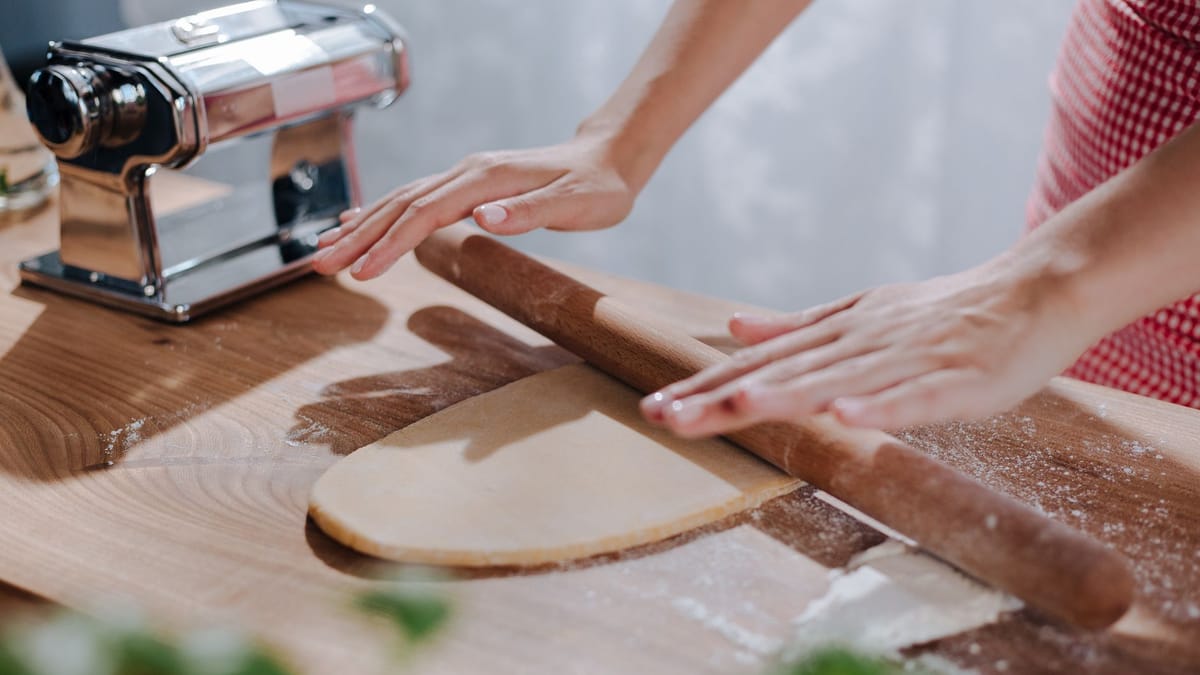
- Cut the dough into four. Keep three wrapped. Flatten one, pass it through the widest setting of the machine, fold it in thirds, and pass it through again — repeat three or four times.
- Now step down one setting at a time. For tagliatelle, stop at the second-thinnest setting: you should be able to see the shadow of your hand through the sheet.
- Dust lightly, roll or fold the sheet loosely and cut to your width. Toss the ribbons in semolina and shape them into loose nests.
- Cook in heavily salted boiling water for 90 seconds to 3 minutes. Fresh pasta is fast. Finish it in the pan with your sauce and a splash of the cooking water.
Troubleshooting
- Dough is crumbly. Egg sizes vary by 15 g or more. Add another yolk, or water a teaspoon at a time — but yolk gives a better dough.
- Dough is sticky. Dust and keep kneading; it usually comes together within a couple of minutes.
- Sheets tear as they thin. Under-kneaded or under-rested. Wrap it and wait another twenty minutes.
- Grey, dry edges. The dough was uncovered. Keep everything you are not actively rolling wrapped.
Make ahead, store, freeze
Nests can air-dry for 30 minutes and then sit in the fridge for a day. For longer, freeze them spread on a tray, bag them once solid, and cook straight from frozen with an extra 30 seconds. The wrapped dough itself keeps 24 hours refrigerated, though it will darken slightly.
Reader questions
Can I do this without a pasta machine?
Yes, with a long rolling pin and more effort. Roll thinner than you think you need to — hand-rolled sheets always thicken up in the pot.
Does “00” flour actually matter?
It gives a silkier, more tender result, but plain flour makes perfectly good pasta with slightly more chew.
What about eggless semolina pasta?
That is a different dough entirely — semolina and water, used for shapes like orecchiette and busiate. It is not a substitution for this one.
Can I use whole eggs only?
Yes. Drop the extra yolks and keep the 100 g flour to 1 egg ratio. Slightly less rich, still excellent.
About this recipe: written by the Bold Story editorial team from classic technique, given in metric and US measures. Times are a guide — pans, ovens and hob output vary, so cook to the cues described rather than to the clock. See our Editorial Policy.