Slow-Roasted Garlic Butter Chicken Thighs
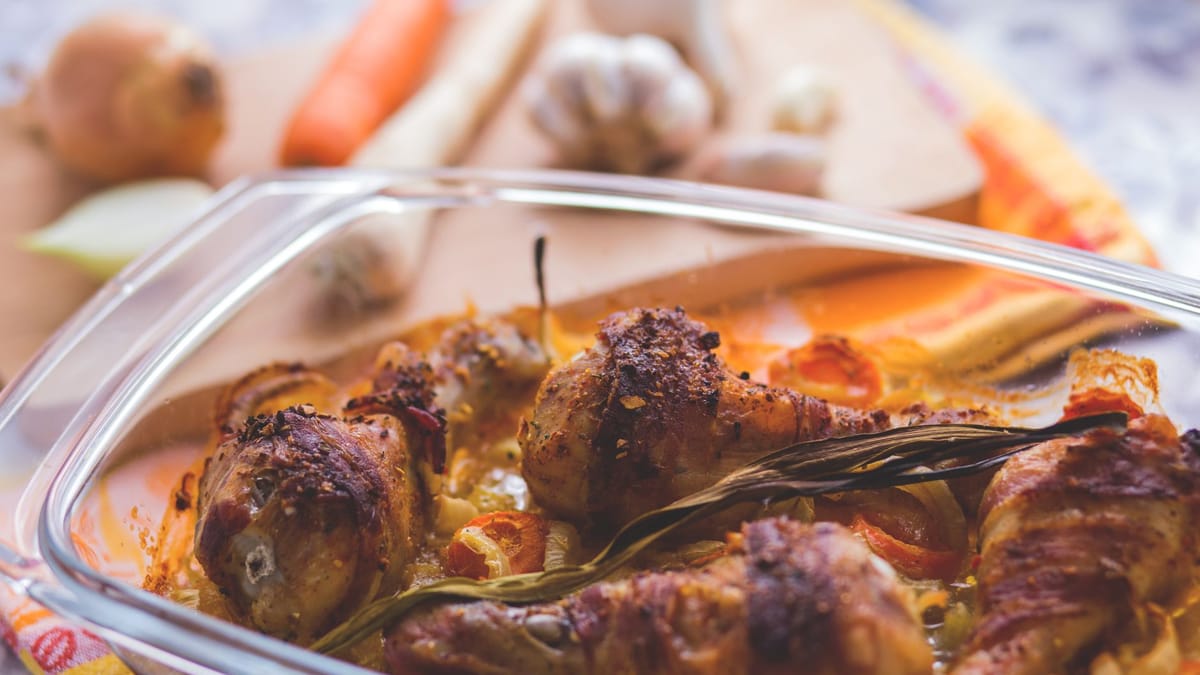
Chicken thighs reward being taken well past the temperature you would ever take a breast. An hour at a low oven melts the connective tissue, then a short blast at the end handles the skin.
★ At a glance
- Serves: 4
- Prep: 15 minutes, plus optional overnight salting
- Roast: 55–65 minutes, then 8–10 minutes hot
- Rest: 5 minutes
- Difficulty: easy
Before you start
If you have the time, salt the thighs and leave them uncovered in the fridge for anything from an hour to overnight. Dry skin is crisp skin, and a wet surface will never brown properly no matter how hot the oven gets.
Choose a roasting dish the thighs fit snugly. Too large and the pan juices spread thin and scorch; too small and they steam.
What you’ll need
For the chicken
- 8 bone-in, skin-on chicken thighs, about 1.2 kg
- 1½ tsp salt and ½ tsp black pepper
- 1 whole head of garlic, halved crosswise, optional
- 120 ml chicken stock or dry white wine
For the garlic butter
- 85 g butter, softened
- 6 garlic cloves, grated or very finely minced
- 1 tbsp chopped thyme, or 1 tsp dried
- Zest of 1 lemon
- 1 tsp smoked paprika
Step by step
- Season the thighs all over with the salt and pepper. Rest them uncovered in the fridge if time allows.
- Heat the oven to 160°C / 325°F.
- Mash the softened butter with the garlic, thyme, lemon zest, paprika and pepper.
- Slide a finger under the skin of each thigh to loosen it and push about two-thirds of the butter underneath. Rub the rest over the top.
- Arrange the thighs skin-side up in the dish, not touching. Pour the stock around them — never over the skin — and tuck in the halved garlic head, cut side down.
- Roast for 55–65 minutes. The meat should pull away from the bone easily and read 80–85°C. Thighs want to go well past the 74°C you would use for breast; that is where the collagen finally gives.
- Turn the oven up to 230°C / 450°F, or switch to the grill, and give it 8–10 minutes until the skin is deep gold and crackling.
- Rest for 5 minutes, then spoon the garlicky pan juices over everything.
Where it usually goes wrong
- Flabby skin. Either the skin was damp going in, or liquid splashed onto it. Blot it and give it longer at high heat.
- Burnt butter in the pan. The dish is too big, so the juices have spread into a thin layer. Use a snugger one next time.
- Dry meat. Boneless, skinless thighs need only 35–40 minutes; they have far less to protect them.
- No fond. If the base looks pale, you added too much liquid. 120 ml is plenty.
Leftovers and reheating
Keep for three days in the fridge. Reheat in a 200°C oven for 10–12 minutes; the microwave will give you soft skin and there is no coming back from that. The juices set to a savoury jelly when cold — melt it back over the chicken, it is the best part.
Common questions
Can I use chicken breast?
Not with this method. Breast is dry well before 80°C. Use thighs, or find a recipe built around a much shorter cook.
What should I serve it with?
Something that will take on the pan juices: mashed potato, orzo, buttered rice or a lot of bread.
Can I do it in an air fryer?
Yes — 160°C for 30 minutes, then 200°C for 6 minutes, in a single layer. You lose the pan juices, which is the trade.
Do I have to loosen the skin?
It is the difference between butter on the chicken and butter in the chicken. Worth the two minutes.
About this recipe: written by the Bold Story editorial team from classic technique, given in metric and US measures. Times are a guide — pans, ovens and hob output vary, so cook to the cues described rather than to the clock. See our Editorial Policy.