The Duvet Spec That Actually Makes a Bed Sleep Cool
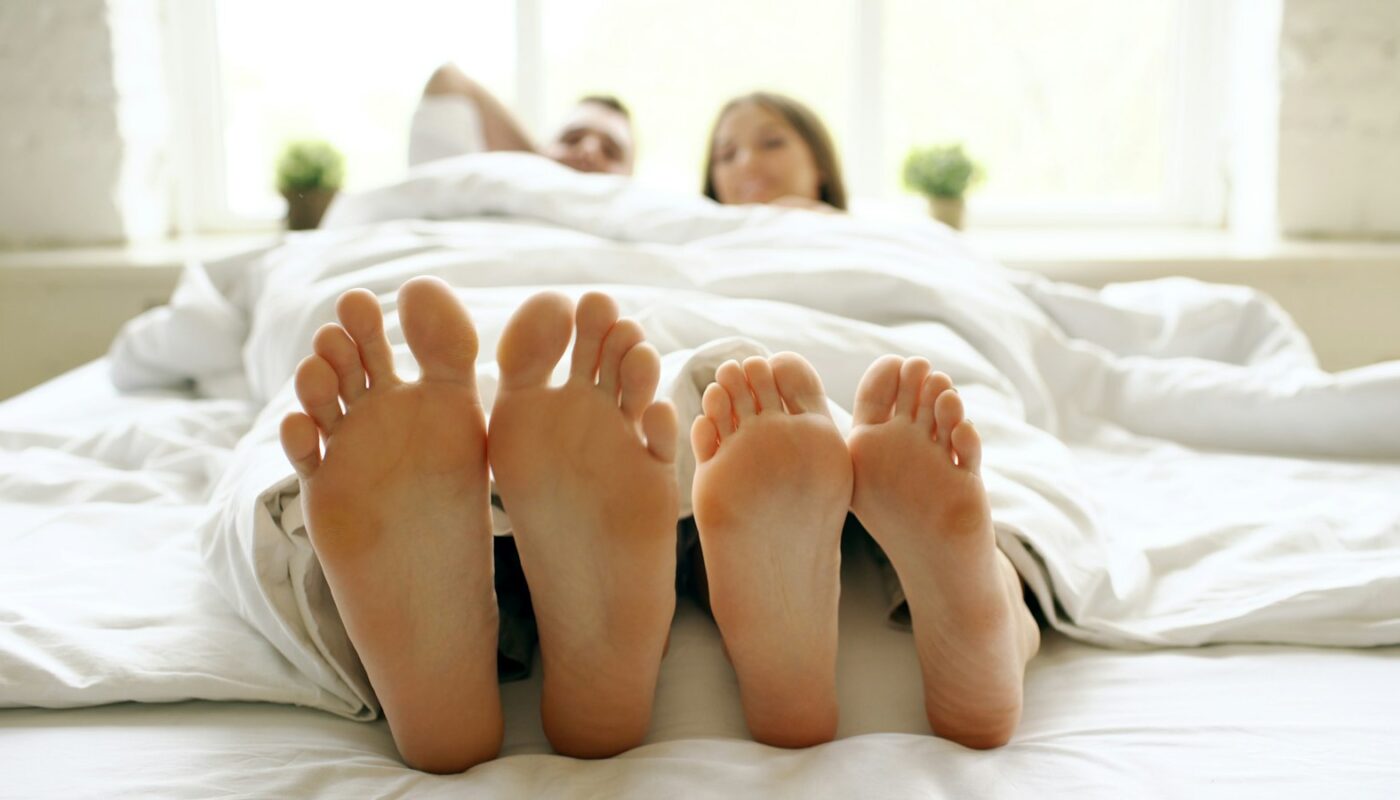
Almost everybody does it and almost nobody thinks about it. At some point in the night, one foot comes out from under the duvet and hangs over the edge of the bed.
That is not a quirk. It is your thermoregulatory system doing its job, using the one part of you that is built for dumping heat, and it is the single most useful thing to understand before spending money on bedding.
You do not fall asleep because you are cool
You fall asleep because you are losing heat. The distinction sounds pedantic and it changes everything about what to buy.
Roughly two hours before you sleep, your core temperature begins to fall under circadian control, and it continues falling by about a degree Celsius across the night. According to a review of sleep and thermoregulation, the likelihood of dropping into that first bout of deep sleep is highest at the moment the rate of that temperature decline is steepest. Not when you are coldest. When you are cooling fastest.
The body manages this by opening up the blood vessels in the hands and feet. In the run-up to sleep those extremities warm until they are about as warm as your torso, and the heat pours out of them. The foot over the side of the bed is that process, made visible.
It is also why the oldest sleep advice in the world works. The same review notes that passive warming in water — a bath — for as little as ten minutes cuts the time taken to fall asleep by around 36%. A hot bath does not warm you to sleep. It drives blood to the skin so that you shed heat faster afterwards.
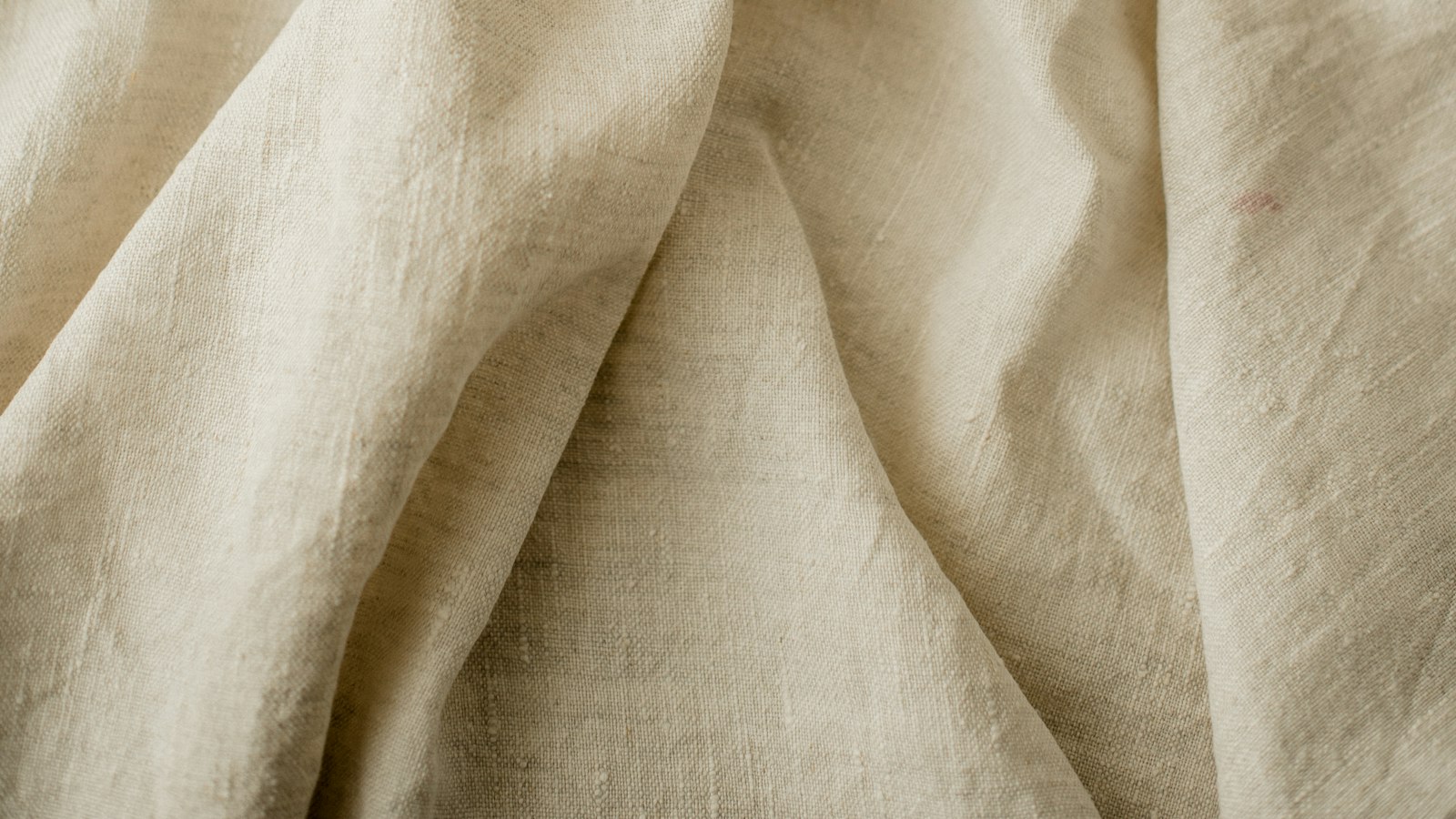
A duvet is not a blanket. It is a microclimate.
Here is the number that reframes the whole category. Under the covers, people maintain a skin microclimate of roughly 33 to 35°C — two to three degrees warmer than their skin during the day — while core temperature falls by that one degree.
Read that twice. The surface of you is meant to be warmer in bed, while the middle of you gets cooler. A duvet is not there to make you cold. It is there to hold a stable warm envelope around your skin while still letting heat and, crucially, moisture escape from it.
When bedding fails, it is almost never because it was insufficiently cold. It is because that envelope became saturated. Trapped humidity stops evaporation, evaporation is how skin sheds heat, and the whole system backs up. That is the 3am wake-up.
🌧️ See what a moisture-first duvet actually costs
So the spec that matters is not the word “cooling”
Almost every bedding brand now prints “cooling” somewhere on the packaging, and the word carries almost no information. Four things actually decide how a bed sleeps.
Moisture transport. Can the fabric move sweat away from skin and release it, or does it hold it? This is the dominant variable and the one least often quantified on a product page.
Fill weight, not fill type. A light fill in a breathable shell beats a premium fill packed too densely. More loft means more insulation, which is the opposite of what a hot sleeper needs.
The cover. This is the one people get wrong most expensively. A duvet engineered for airflow, sealed inside a heavy cotton-sateen cover, is a heavy cotton-sateen cover. The outermost layer sets the ceiling on the whole system.
The mattress underneath. Half your body is pressed into it, with no airflow at all. A memory-foam mattress that stores heat will undo good bedding on its own.
Where Rest fits
Rest builds around a fabric it calls Evercool, and the company’s pitch is squarely aimed at the mechanism above rather than at the word cooling: the material is described as wicking moisture away and drying quickly, which is the property that keeps the microclimate from saturating. The brand describes the fibre as thinner than a human hair, cooler than cotton and smoother than silk.
The range runs beyond the comforter to sheet sets, pillowcases, pillows and sleepwear — which matters more than it sounds, given the cover problem above. Buying the duvet and keeping an old heavy cover is the most common way to spend money and feel no difference.
On results, be precise about whose numbers these are. Rest cites a SleepScore Labs study in which 97% of participants found the cooling sensation better than a regular comforter, 94% reported improved overall sleep quality and 88% experienced better temperature regulation. That is a brand-commissioned study reported by the brand, not independent testing, and it should be read as such. What makes it checkable is the return policy: 30-night returns and a one-year warranty mean the claim is testable on your own mattress, in your own room, which is the only test that matters.
🛏️ Try it on your own mattress for 30 nights
Two things to sort out first
Three situations where no purchase helps, and they are cheaper to rule out than to buy around.
The room is simply too warm. Sleep architecture is sensitive to ambient temperature in a narrow band, and REM in particular sits in a tight thermal window. Past a certain room temperature, bedding stops being the variable. Fix the room first; it is usually cheaper.
You share the bed with someone who runs cold. One duvet cannot hold two different microclimates. The Scandinavian solution — two separate single duvets on one bed — solves in an afternoon what couples spend years negotiating.
It might not be the bed at all. If night sweats are new, drenching, or arrive alongside other symptoms, that is a conversation with a doctor rather than a shopping decision. Bedding is worth trying for ordinary hot sleeping. It is not worth using to postpone a question that deserves a professional answer.
Reading a product page for the mechanism
Moisture, or only temperature. Wicking and drying are the mechanism. A page that says “cooling” five times and never mentions moisture is describing a feeling rather than a process.
The cover, not only the duvet. If you are keeping the old cover, the cover decides the outcome. Replacing one without the other is the commonest way this purchase disappoints.
Fill weight, stated, and low. Loft is insulation. If the weight is not published anywhere, that is itself information.
A trial long enough to include a warm night. A cooling claim tested in a cold week proves nothing.
Whether the mattress is the actual problem. If it holds heat, the bedding above it is not where the fix lives.
🧵 Match the cover to the duvet, not to the old set
The upgrade that actually works
Sort the room first — a fan on low, blinds closed through the afternoon, a mattress that is not holding yesterday’s heat. That is free, and it takes the pressure off everything else.
Then the bedding becomes the lever, because it is the only part of the system touching you all night. A duvet built to move moisture rather than hold it, under a cover chosen to match it rather than whatever was in the cupboard, is the difference between waking at three and sleeping through to the alarm.
That is a small amount of money against a third of your life, and it is the rare purchase you notice on the first night. If your current set is cotton-heavy, years old, or was bought for a colder flat than the one you live in now, this is the upgrade worth making.