Nobody Tells You Where the Wires Go
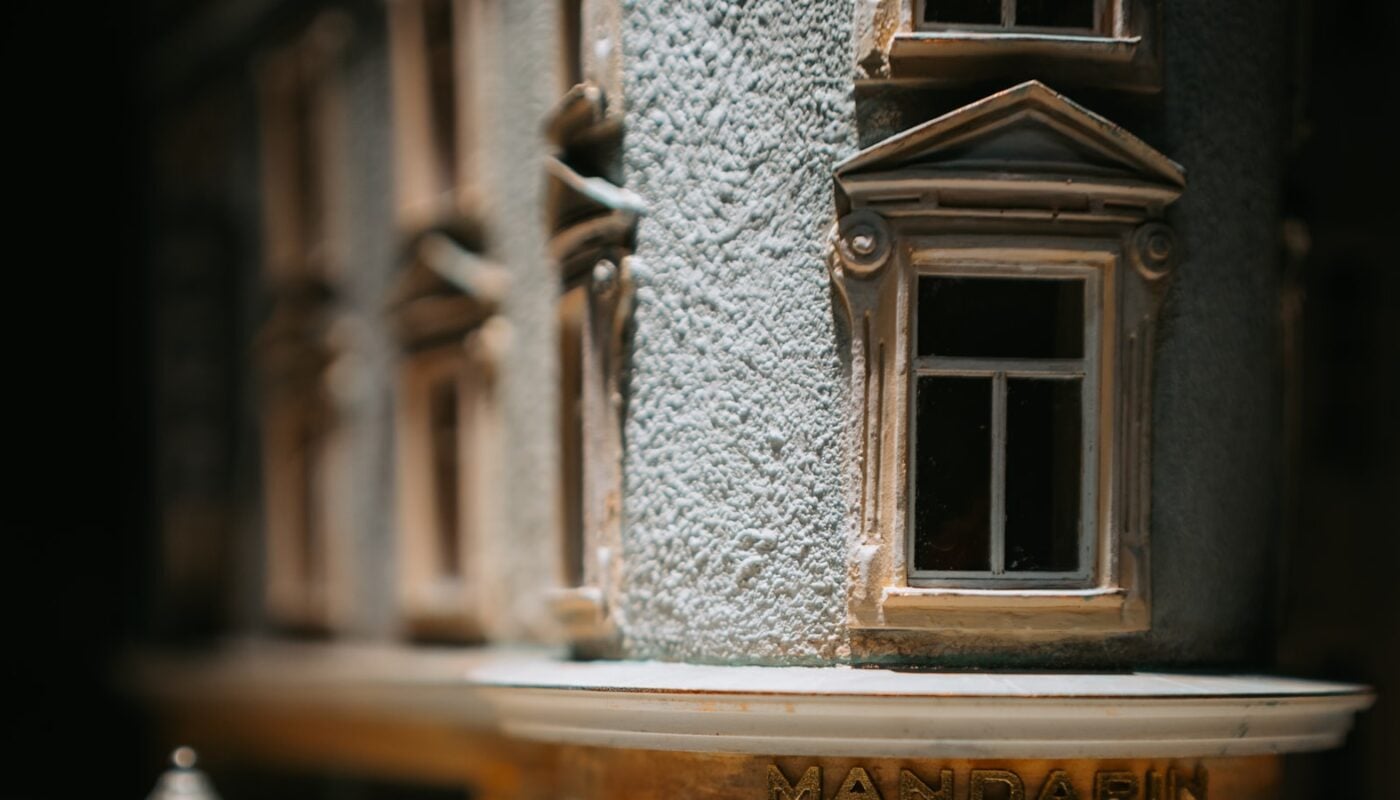
The model was finished on a Sunday afternoon. The light kit arrived on the Thursday. By Sunday night the model was in pieces on the dining table again, and the person who bought it was holding a pair of tweezers and a wire thinner than a hair, trying to work out how to get it from the second floor to the base without it crossing a window.
This is the part nobody mentions in the reviews. Lighting a build is not a decorating step you do at the end. It is a construction step you do at the beginning, and if you did not do it at the beginning, you are going backwards.
What “adding light” actually involves
A light kit is not a lamp you aim at a finished model. It is a set of micro-LEDs on enamelled wire, a distribution board that everything plugs into, and a power source. Every one of those LEDs has to end up inside the build — behind a window, under an eave, tucked into a sign. And every wire has to travel from there to the board without ever appearing on a surface someone can see.
Bricks are solid plastic. Wire goes in the gaps between studs, under tiles, through the hollow of a wall. Those gaps exist where the designer happened to leave them, not where your wire needs to go. So you lift a roof. Then a floor. Then the wall you already glued in your head as finished.
Three places it goes wrong
The routing. Most people plan where the lights go and assume the wire will follow. It often cannot. A wire that has to cross an open courtyard has nowhere to hide, and painting it or taping it down looks exactly like what it is.
The board and the battery. This is the honest failure. The distribution board is a plastic rectangle the size of a matchbox, and the power source is bigger. Both have to live somewhere. Inside the model means designing a void for them. Behind the model means a cable running off the back of your shelf. Nobody thinks about this until the lights are already in.
The seams. A wire pinched between two plates lifts the upper one by a fraction of a millimetre. Once. Twice. Across a long wall it becomes a visible bow, and the model that was square is now slightly not.
Sets built around the light are a different object
The alternative is not a better light kit. It is a set that was designed with the lighting as part of the structure — channels routed through walls, a cavity for the board, an interior laid out so the glow lands where a room would actually be lit. You do not thread anything. You build, and the wire has a place to be at every step.
That is the category Lumibricks sits in. Their catalogue is built around lit scenes rather than lit versions of unlit sets — the collections are named for the kind of place that is interesting after dark. Cyberpunk Neoncity, Street Fusion, Retro House, The Old West, Middle Ages, Town Life, Farm Life, Road Trip. Individual sets follow the same logic: Izakaya, Book-Cafe, Newsstand, Luna Cottage, Misty Forest Cabin, Central Train Station, Film Studio Tower.
Look at that list and the pattern is obvious. A newsstand, a bar, a cafe, a station — every one is a subject where the light coming through the windows is the point of the picture. That is a design decision, not a feature list.
A few practical things they publish: a two-year limited warranty, replacement parts, instruction PDFs, worldwide shipping and dispatch usually within 48 hours, and stated compatibility with other building brick systems. The replacement-parts and PDF provision is quietly the most informative item there — it tells you these are builds where one missing element matters, and the company knows it.
🔌 See which sets have the wiring built into the structure
Four things to check before you commit either way
Where the power comes from. Battery box or USB. A battery box means changing cells inside a sealed model, which is either designed for or genuinely annoying. USB means a cable, which means a socket. Measure from your shelf to the nearest outlet before you buy anything.
How many light points, and where. A set with twelve interior lights and one exterior lamp reads very differently at night from one with the numbers reversed. Interior light through windows is what makes a model look inhabited.
Whether you can switch zones. All-on or nothing is fine on a small build. On a street scene you eventually want the shop lit and the upstairs dark, or the whole thing looks like a showroom.
Whether you will ever take it apart. A lit set is meant to stay built. If you are someone who dismantles and rebuilds, you are buying wiring you will have to redo.
🏮 Look at the night-scene builds where the light does the work
Who this suits
People who build to display rather than to solve. Anyone whose finished models already live on a shelf rather than in a box. People with a dark corner, a hallway, a home office with the overheads off — somewhere a small lit thing changes the room. And anyone who has already bought one aftermarket light kit and does not want to do that again.
Who should skip it
Builders who want difficulty. Lighting adds fiddliness, not challenge. If what you enjoy is a hard technical build, the wiring is an obstacle between you and the part you like.
People who rebuild constantly. The whole value here is permanence. If your sets come apart every few months, you are paying for something you will actively undo.
Anyone whose display spot has no power. This sounds obvious and it is the single most common regret. A beautiful lit model on a shelf across the room from the nearest socket is an unlit model.
People after a specific licensed subject. These are original designs. If you want a particular film or franchise on your shelf, this is not where you will find it.
Where to actually put it
Lit models want a darker background and a spot roughly at eye level. Against a white wall in daylight the effect disappears entirely — you are looking at a small building with some pale dots in the windows. Against a bookshelf, in a room with the main light off, the same model reads as a scene. Away from a window helps too, for the same reason and also because sun fades plastic over a few years.
The nice consequence of a build designed around its own lighting is that all of this is decided before you start. You are not solving a wiring problem on a finished object. You are just building something that happens to switch on at the end.
🧱 Check the light points and power setup before choosing a shelf